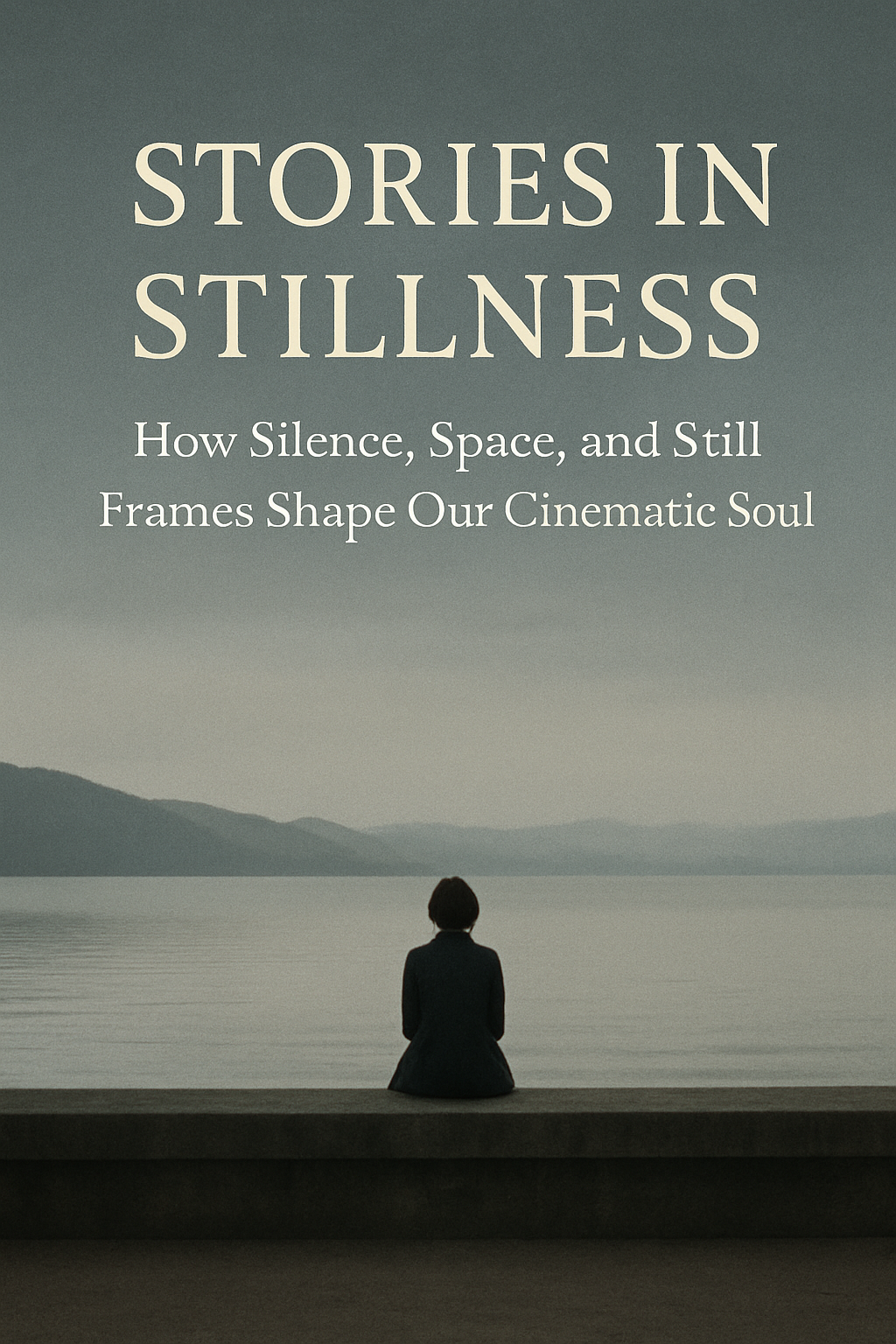
Stories in Stillness: How Silence, Space, and Still Frames Shape Our Cinematic Soul
by Aritro Jolodhi
The Power of Stillness
In an age of motion, distraction, and overstimulation, stillness might seem like a void. In storytelling, especially cinematic storytelling, it often feels like we must fill every moment with action, dialogue, and spectacle to keep an audience's attention. But stillness is not absence. It's presence — a different kind of attention. A whisper that invites us to listen, rather than a shout that demands it.
Some of the most evocative moments in cinema come not from what is said or done, but from what is withheld. A lingering gaze. A quiet street. A character sitting alone in a room. These instances of stillness resonate deeply because they reflect something true about our own interior lives. Stillness in storytelling is not passive — it’s one of the most emotionally active choices a creator can make.
This essay is an exploration of that stillness: how it functions in cinema and beyond, how it connects across cultures, how it challenges audiences, and how, ultimately, it tells stories that move us without movement. In this exploration, we find that stillness is not a break from storytelling — it is storytelling.
The Language of Silence
What happens when a character says nothing? When the soundtrack goes quiet? When a scene holds its breath? In these moments, a new language emerges — the language of silence.
Cinema has long understood the emotional power of silence. The early silent film era proved that expressions, gestures, and compositions could tell entire stories without a single word. But even after the invention of sound, the best directors never forgot the power of silence. Think of Jane Campion’s The Piano, where Holly Hunter’s character, rendered mute by choice, communicates through glances and keys rather than speech. Or A Quiet Place, where silence becomes both a survival tactic and a storytelling technique, heightening every gesture, every flicker of fear or affection.
In Satyajit Ray’s Pather Panchali, long stretches of silence speak volumes. A scene where Durga and Apu run through a field to see a train — no dialogue, only wind and breath — encapsulates the wonder of childhood and the expanse of rural life. The silence lets us see more, feel more.
Silence also grants the audience agency. It invites us to lean in, to interpret, to fill in emotional blanks with our own experiences. That participatory nature of silence makes it one of the most inclusive tools in a filmmaker’s kit. We all hear it differently. We all feel it uniquely.
Still Frames, Moving Emotions
Stillness in visual composition — the absence of camera movement or dynamic action — can create a different kind of narrative rhythm. Directors like Yasujiro Ozu and Wes Anderson are masters of the still frame. In Ozu’s films, the camera often remains fixed, almost meditative, while characters move within or outside the frame. His famous "tatami shots," taken from a low angle as if from a kneeling position, force us to observe, to sit with the characters rather than chase them.
Wes Anderson, on the other hand, uses symmetrical stillness to create an aesthetic universe. Each frame is like a painting — controlled, calculated, and often emotionally repressed. Within these rigid visuals, the smallest emotional tremors become seismic. A raised eyebrow, a shift in body weight, a prolonged stare — all become story events.
Then there's Andrei Tarkovsky, whose long takes and static compositions stretch time and perception. In Nostalghia, he holds a shot for nine minutes of a man carrying a candle across a drained pool — it’s maddening, transcendent, and unforgettable. That stillness becomes a spiritual experience.
Still frames can be uncomfortable. They ask the viewer not just to watch but to wait. But in that waiting, something remarkable happens: emotions rise to the surface. We stop consuming the image and begin inhabiting it.
Cultural Reflections in Stillness
Stillness is not perceived the same way across cultures. In Eastern storytelling, especially in Japanese and Korean cinema, stillness is often revered. It reflects not boredom or emptiness, but contemplation, depth, and space for meaning.
Take the work of director Hirokazu Kore-eda. In films like Still Walking or After Life, he uses mundane, unhurried scenes to explore grief, memory, and family. Nothing explosive happens. Characters sit, eat, walk. Yet we are moved deeply — because those still moments mirror the quiet, accumulated truths of our own lives.
In contrast, Western cinema often prioritizes pace and plot. But even here, there are auteurs who embrace stillness. Terrence Malick’s The Tree of Life or Days of Heaven offer long, lyrical passages with minimal dialogue, allowing visuals and ambient sound to shape narrative.
These cultural variations reveal something profound: that stillness is a value system. Where some cultures see speed as efficiency, others see slowness as wisdom. Where some see silence as awkward, others see it as respectful. Stillness in cinema reflects not just artistic taste but worldviews.
Stillness in Storytelling Beyond Film
The power of stillness isn’t limited to cinema. Photography, literature, and even painting tell stories through silence and space.
Take Dorothea Lange’s Migrant Mother — a single still image that speaks of poverty, resilience, and maternal strength more powerfully than any video. The lines on her face, the averted gaze, the sleeping children — it is stillness that invites our imagination to complete the story.
In literature, Ernest Hemingway’s Iceberg Theory is a form of narrative stillness. By omitting details and letting the subtext carry meaning, he forces readers to dig beneath the surface. The silence between words matters as much as the words themselves.
In painting, Edward Hopper’s Nighthawks presents a quiet diner scene — but that stillness suggests loneliness, urban isolation, a yearning for connection. What we don’t see or hear becomes the story.
Stillness across media operates in similar ways. It grants us room to feel, to interpret, to return. And in doing so, it becomes deeply personal.
Audience Reception and the Fear of Boredom
Stillness can challenge modern audiences. We’re trained for speed — YouTube shorts, TikTok, 3-second scrolls. A pause can feel like dead air. But that discomfort is revealing. It’s not that we dislike stillness — it’s that we’re afraid of what it reveals.
Films like Drive My Car or Columbus take their time. They trust the viewer to be patient. These stories unfold slowly, lingering on silences, on unspoken grief, on characters thinking instead of acting. For some, these films are boring. For others, they are life-changing.
This divide shows how stillness is a mirror. It reflects our emotional bandwidth. If we can sit with it, we often find something deep within ourselves. But if we flee from it, we might miss what the story was really trying to show.
Stillness doesn’t demand attention — it earns it. And that makes the reward more profound.
Crafting Stillness as a Filmmaker
How can a storyteller consciously create stillness?
Start with intention. Stillness is not the lack of things happening — it’s the choice to focus on fewer, deeper things. Think of lighting: natural light often enhances stillness by softening the frame. Think of sound: the absence of music or ambient hums can make a single breath audible and powerful.
In editing, resist the urge to cut quickly. Let moments breathe. Let an actor’s reaction linger. In writing, don’t overwrite — trust the visual. A silent scene can say more than three pages of dialogue.
Stillness can also come from blocking and framing. Place characters in isolated spaces. Let the negative space speak. Watch how their bodies relate to the room, to each other, to the void.
But most importantly, trust your audience. Stillness requires a pact between storyteller and viewer: that something meaningful is happening beneath the quiet. If you believe it, they will too.
Rediscovering the Art of Stillness
In a world desperate for attention, stillness is resistance. It resists the noise, the rush, the expectation of constant motion. It says: stop. Look. Feel.
“Stories in Stillness” reminds us that not all stories need to shout. Some only need to breathe. And in their quiet, they might be heard more deeply than ever.
Let us, then, embrace the slow scene, the silent shot, the still frame — not as filler, but as the frame where meaning emerges. Because sometimes, in storytelling as in life, it’s the quiet moments that speak the loudest.
Latest Posts
Where Folklore Meets Reality