Share This Film
About Director
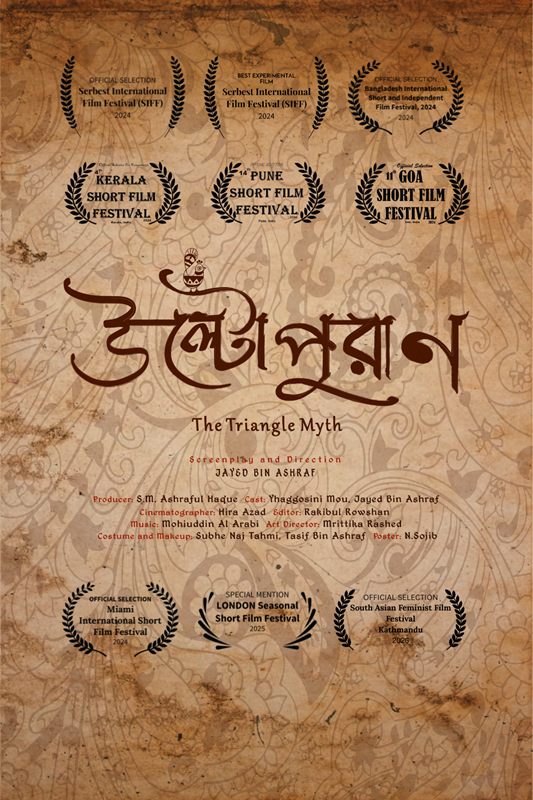
Jayed Bin Ashraf (Heem) is a versatile and visionary Film Director and Costume Designer from Bangladesh. A graduate in Film and Television from Jagannath University, he works across film, theatre, painting, and visual design, shaping narratives through both storytelling and aesthetics. Heem has gained recognition as a costume designer and creative artist through several short films, feature films, and theatre productions. He made his directorial debut with the short film “Ultopuran – The Triangle Myth,” where he explored unconventional storytelling and reimagined classic narratives through a contemporary lens. Beyond cinema, his work in book cover design has earned appreciation within the publishing industry. Currently, Heem is developing new scripts, continuing to push artistic boundaries with an imaginative, socially conscious, and visually driven approach to arts and entertainment.
Synopsis
In "Ultopuran," the fusion of Tagore's characters Hyamanti and Vishu from different novels creates a narrative that explores societal norms, gender expectations, and identity. Hyamanti's world, though traditional, also connects with this progressive vision. Vishu, reminiscent of "Raktakarabi, now an emerging artist with feminine attire and adornments, embodies self-reliance despite societal perception. Hyamanti, drawn to him, expresses love but her affection for him clashes with societal prejudice, and fears the societal judgment her child might face. The narrative navigates through the complexities of gender diversity, touching on themes of oppression and the longing for a gender-sensitive society. The story weaves a modern exploration of diversity and societal transformation, bridging traditional ideals with individual aspirations.
Director's Statement
"Ultopuran," the fusion of Tagore's characters Hyamanti and Vishu from different novels creates a narrative that explores societal norms, gender expectations and identity. Hyamanti's world, though traditional, also connects with this progressive vision. Vishu, reminiscent of "Raktakarabi, now an emerging artist in "Ultopuran," with feminine attire and adornments, stays self-reliant despite societal judgment. Hyamanti, drawn to him, expresses love but her affection for him clashes with societal prejudice, fears the societal judgment her child might face. The narrative navigates through the complexities of gender diversity, touching on themes of oppression and the longing for a gender-sensitive society. Moreover, the story weaves a modern exploration of diversity and societal transformation from Bengali literature, bridging traditional ideals with individual aspirations.