Share This Film
About Director
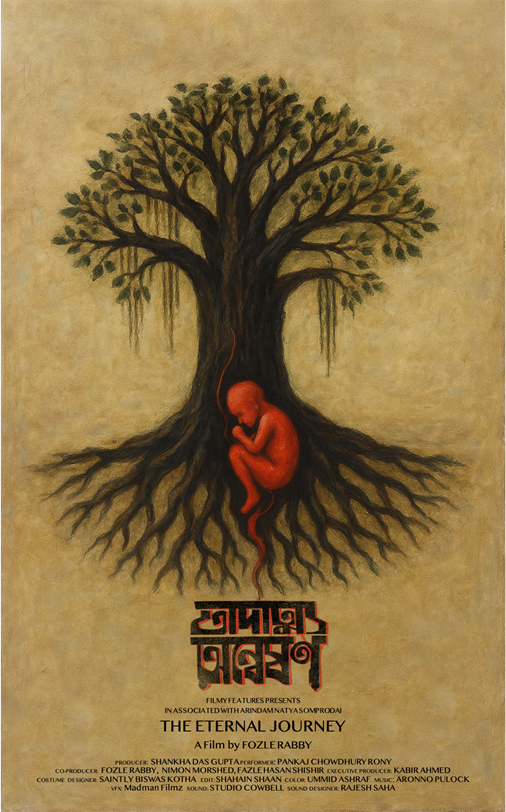
‘Fozle Rabby is a Bangladeshi filmmaker whose work explores inner landscapes, memory, and the fragile boundary between the physical and the spiritual. Active as a director, writer, editor, post-production supervisor, and actor, his practice blends experimental form with performance-based storytelling. His films have screened internationally at festivals including Cairo, Fantasia, Sitges, SXSW London, Jogja NETPAC, KISFFO, Yalova, and DIFF. His experimental short film The Eternal Journey (তাদাত্ম্য অন্বেষণ) has screened internationally and was selected for the Spiritual Films Section at the Dhaka International Film Festival, where it was the only Bangla film in that category. With nearly a decade of experience in cinema and media, Rabby continues to develop narrative and experimental works that engage with identity, silence, and existential inquiry.
Synopsis
A theatre artist’s journey to prepare for a theatre character named “Kute Kahar”. The Bengali word “Kahar” stands for Palanquin-bearer in English.The film follows the journey of Pankaj Chowdhury, a dedicated theatre actor, as he immerses himself in the role of Kute Kahar, blurring the lines between stage and reality. As he embarks on a physical and emotional journey, he seeks the deeper truths of the character’s life and struggle.
A “Kahar” is never respected in the society because of his low-class origin. From a young age to old age, they carry heavy loads in their palanquin and at the end of the career, they become hunchbacks and thus lose their strength to stand straight. Through acting, Pankaj believes one can experience the divine essence, and in this realization lies true performance. For that, he does everything that Kute Kahar used to do. He tries to hunch under the weight of a heavy stone on his back. He practices changing his voice, attempting to capture the sorrowful tones of the old Kute Kahar. He has walked mile after mile along hills, seasides, and riverbanks, like a palanquin-bearer. He has spent days meditating deep inside the forest, striving to dissolve himself into nature. The Eternal Journey into one’s own self. The film ends with Pankaj’s performance on stage with a standing ovation and applause from the audience. But the pain of Kute Kahar remains with Pankaj. The film explores self-identity, paying tribute to Bengal's cultural roots and history.
Director's Statement
‘The Eternal Journey’ is not merely a film; it is a journey of existence, a search for a lost identity. When we attempt to understand our being, it is not just an individual quest—it carries the weight of cultural inheritance. This film is inspired by the character Kute Kahar, who comes to life from Nasrin Sultana’s story and Arindam Natya Goshthi’s stage production. Crafted in an experimental form, this film reinterprets Kute Kahar’s struggles, humanity, and resilience through a new artistic lens. It stands as a tribute to his enduring legacy.
This journey of exploration takes us deep into the past of the Kahars—a laboring community whose voices carry the echoes of oppression yet embody an unyielding spirit of survival. The palanquin bearers, the Kahars, have been an inseparable part of Bengal’s history, their relentless toil and undying humanity forming the vibrant pulse of our cultural heritage.
The central character of our film, Kute Kahar, is one of those silent souls who embarks on a path of self-discovery, only to confront the profound cultural and traditional history that shaped his existence. He realizes that his suffering is not merely personal—it is a shared experience embedded in the
Reviews (5)
Sourav Karmokar
Film-maker, 1mo ago
Pure spiritual film. Amazing!
Sheikh Arko
Tinseltown Films, 1mo ago
This is one of the finest Bangladeshi short films I've seen in many years. Some films have a unique way of bringing peace to the heart, and this is definitely one of them. The director's storytelling was beautiful, and the performances by the cast were simply outstanding. Overall, I personally loved this short film.
Rahul
Student, 1mo ago
Really loved Pankaj Chowdhury Rony's transformation into 'Kute Kahar" and hats off to Fozle Rabbi for taking on such an experimental work.
Hades
Filmmakar, 1mo ago
Good flow